Repair Damaged Walls with Clean, Smooth Surfaces
AMS Construction installs drywall and paneling to replace walls damaged by water, impact, or age, restoring flat surfaces ready for paint or finish.
Your walls may show cracks, holes, or water stains that cannot be patched effectively, or you may have outdated paneling that no longer suits the space. Drywall installation replaces these damaged sections with smooth, paintable surfaces, while new paneling can add texture or warmth to rooms where you want a finished look without the need for extensive painting. Both options restore walls to a condition that looks clean and holds up to normal wear.
AMS Construction removes damaged drywall or old paneling, inspects the framing for issues such as mold or rot, and installs new sheets that are taped, mudded, and sanded to create seamless joints. You decide whether to finish the walls with paint, wallpaper, or a protective coating, and the work proceeds room by room to keep disruption manageable. If the damage was caused by a roof leak or plumbing issue, that problem must be fixed before new drywall goes up.
Reach out to discuss the condition of your walls and the best approach to restore them.
What Drywall and Paneling Installation Involves
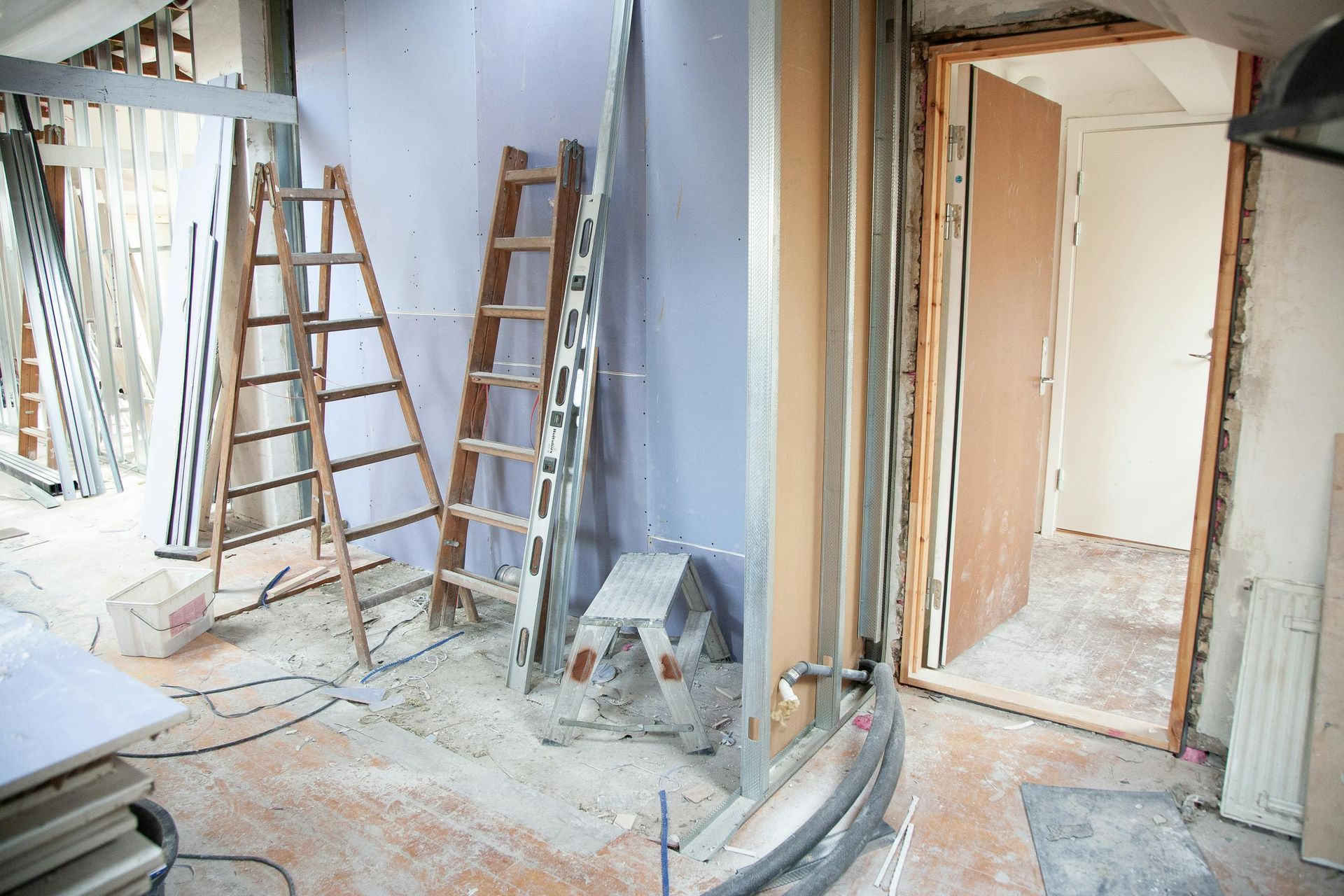
The process starts with removing damaged sections and exposing the wall framing. You will see the studs and any insulation, wiring, or plumbing lines behind the wall. If framing is warped or rotted, it is replaced before new drywall or paneling is installed. Sheets are cut to fit around outlets, switches, and windows, and they are fastened securely to the studs.
For drywall, joints are covered with tape and joint compound, then sanded smooth after drying. You will notice that the finished surface looks flat and uniform, with no visible seams or fastener heads. Paneling installs faster and does not require mudding or sanding, but it must be aligned carefully to maintain consistent spacing and avoid gaps at the edges.
Once the installation is complete, the walls are ready for primer and paint or for trim and baseboard installation. If your project includes a textured finish or moisture-resistant drywall in a bathroom, those materials are selected during the planning stage. The finished walls provide a durable surface that resists minor impacts and can be repainted as needed.
Clearing up uncertainty about wall repairs
<p style="margin:0 0 16px 0;">Homeowners typically ask how long drywall takes to dry, whether paneling can go over damaged walls, and what causes cracks to reappear after patching.</p>
How long does drywall mud take to dry before sanding?
Joint compound typically takes 24 hours to dry between coats, depending on humidity and thickness. Rushing the process results in cracks or an uneven surface that shows through paint.
What causes drywall cracks to return after they are patched?
Cracks return when the underlying cause is not addressed, such as foundation settling, framing movement, or poor taping technique. Proper reinforcement with tape and multiple coats of compound prevents recurrence.
Why does drywall feel soft or crumble in some areas?
Soft drywall indicates water damage, which weakens the gypsum core and causes it to lose structural integrity. The damaged section must be cut out and replaced, and the moisture source must be fixed to prevent recurrence.
What type of drywall should be used in bathrooms or basements?
Moisture-resistant drywall, often called green board or purple board, resists mold and holds up better in damp conditions. It should still be paired with proper ventilation and waterproofing in areas with direct water exposure.
When is paneling a better option than drywall?
Paneling works well when you want a finished look without painting or when covering uneven walls that would require extensive prep work. It installs faster than drywall but offers fewer options for texture or color changes later.
AMS Construction assesses wall damage and recommends materials based on the room conditions and your finishing preferences. Contact the team to schedule an evaluation and discuss drywall or paneling installation.